✨ New Arrivals Just Dropped!Explore


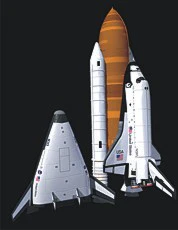

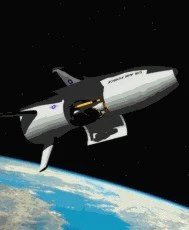
Anigrand 5008 X-Planes RLV Set X-33/X-34/X-37/X-40A/X-42 1:144
X-33, X-34, X-37, X-40A, X-42 X-planes RLV compilation set. In early 1990s, US congress requested to reduce funding for Space Shuttle operations. It is difficult for NASA to reduce costs without affecting safety. Many studies suggest that a Reusable Launch Vehicle (RLV) designed for quick-turnaround operation after each flight will allow for costs reduction. In 1994, NASA launched the RLV programs to demonstrate technologies of a new generation of space boosters capable of delivering payloads at lower cost. Lockheed-Martin was selected as partner for the X-33 development, and Orbital Sciences won contract for the X-34 program. In 1996, the USAF interested in the RLV concept which has potential to become operational military space plane. A competition calling for advanced RLV started. Boeing won contracts to develop the X-37 launch vehicle and X-40A aerodynamic testbed. The X-40A first drop-tested in 1998. In 2001, due to budget cut, both the X-33 and X-34 were cancelled while the X-33 85% completed and the X-34 took place first unpowered flight. In 2002, Orbital Sciences has presented a design for the USAF's reusable solution to the upper stage requirement. It became the X-42 still-classified space project.
$50.89
Original: $145.41
-65%Anigrand 5008 X-Planes RLV Set X-33/X-34/X-37/X-40A/X-42 1:144—
$145.41
$50.89Product Information
Product Information
Shipping & Returns
Shipping & Returns
Description
X-33, X-34, X-37, X-40A, X-42 X-planes RLV compilation set. In early 1990s, US congress requested to reduce funding for Space Shuttle operations. It is difficult for NASA to reduce costs without affecting safety. Many studies suggest that a Reusable Launch Vehicle (RLV) designed for quick-turnaround operation after each flight will allow for costs reduction. In 1994, NASA launched the RLV programs to demonstrate technologies of a new generation of space boosters capable of delivering payloads at lower cost. Lockheed-Martin was selected as partner for the X-33 development, and Orbital Sciences won contract for the X-34 program. In 1996, the USAF interested in the RLV concept which has potential to become operational military space plane. A competition calling for advanced RLV started. Boeing won contracts to develop the X-37 launch vehicle and X-40A aerodynamic testbed. The X-40A first drop-tested in 1998. In 2001, due to budget cut, both the X-33 and X-34 were cancelled while the X-33 85% completed and the X-34 took place first unpowered flight. In 2002, Orbital Sciences has presented a design for the USAF's reusable solution to the upper stage requirement. It became the X-42 still-classified space project.