✨ New Arrivals Just Dropped!Explore


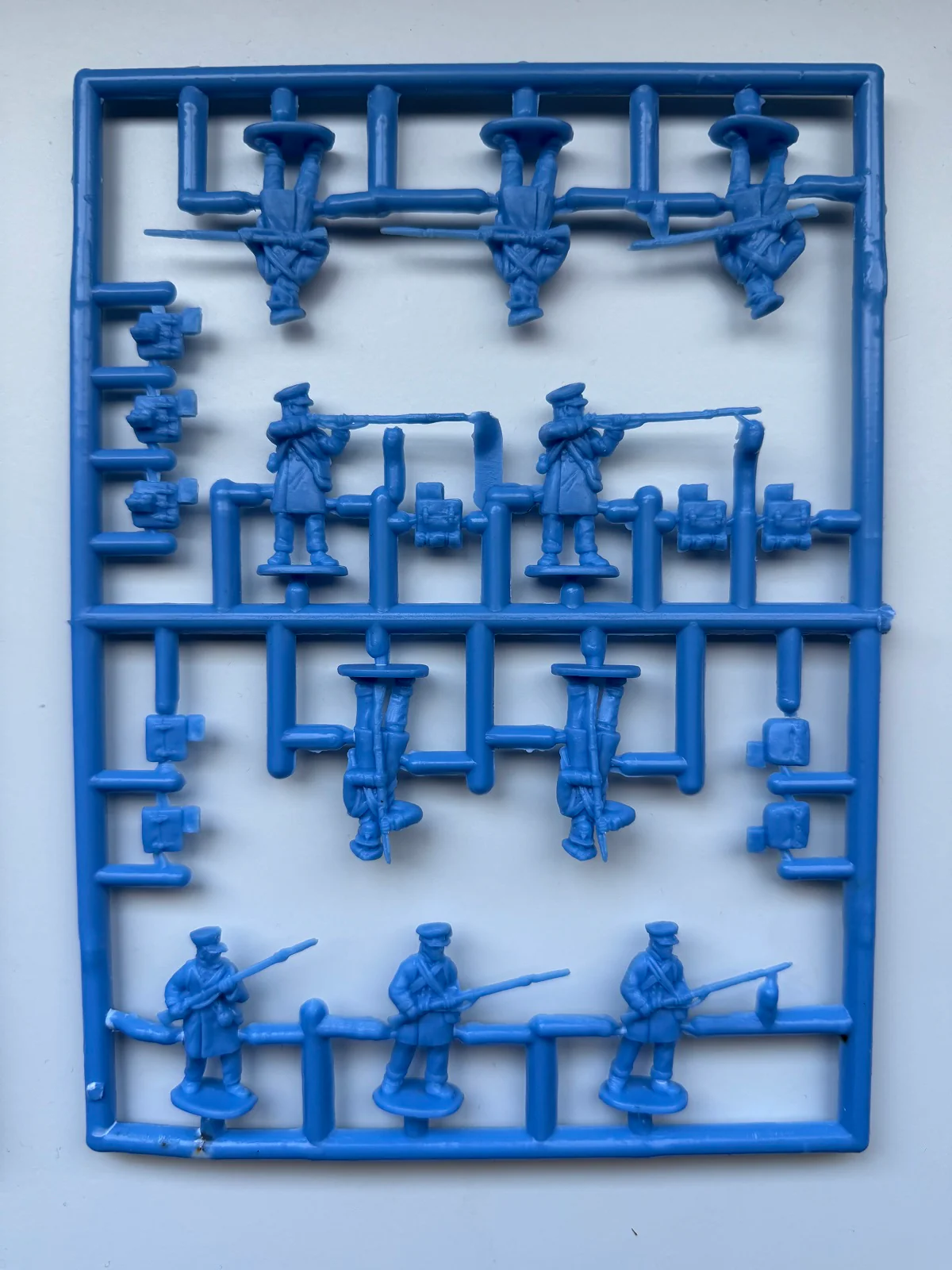
HAT Industrie HAT2002 Napoleonic Prussian Landwehr
Napoleonic Prussian Landwehr (Action) The Prussian Landwehr were militia units formed after the devastating Prussian defeats by Napoleon in the early 1800s. Officially established in 1813, the Landwehr was a key part of the Prussian military reforms aimed at creating a broad-based national army. These units were composed largely of civilian volunteers and reservists-farmers, tradesmen, and students-who were motivated by patriotism and a desire to resist French occupation. Although less trained than regular troops, the Landwehr played a crucial role in the War of Liberation (1813-1814) and later campaigns. They symbolized a more democratic and nationalistic spirit within the Prussian army. Uniform Description (c. 1813-1815): The Landwehr un iforms were simple but distinctive, reflecting both limited resources and their militia status: Tunic: Typically a dark blue Litewka (a type of simple frock coat), sometimes black or dark gray depending on supply. Collars & Cuffs: Colored according to the province or regiment-red, yellow, white, or light blue were common. Headgear: The iconic black oilcloth-covered shako or a felt-covered peaked cap (Kasket) often adorned with a white Landwehr cross badge. Trousers: Gray or dark blue, often with gaiters. Equipment: They carried basic muskets, cartridge boxes, and often had a crossbelt with a wooden or leather canteen. Their look was rougher and more practical compared to the polished uniforms of line infantry, which actually adds a lot of character and charm to model figures. Figures come unpainted as usual
$6.84
Original: $19.54
-65%HAT Industrie HAT2002 Napoleonic Prussian Landwehr—
$19.54
$6.84Product Information
Product Information
Shipping & Returns
Shipping & Returns
Description
Napoleonic Prussian Landwehr (Action) The Prussian Landwehr were militia units formed after the devastating Prussian defeats by Napoleon in the early 1800s. Officially established in 1813, the Landwehr was a key part of the Prussian military reforms aimed at creating a broad-based national army. These units were composed largely of civilian volunteers and reservists-farmers, tradesmen, and students-who were motivated by patriotism and a desire to resist French occupation. Although less trained than regular troops, the Landwehr played a crucial role in the War of Liberation (1813-1814) and later campaigns. They symbolized a more democratic and nationalistic spirit within the Prussian army. Uniform Description (c. 1813-1815): The Landwehr un iforms were simple but distinctive, reflecting both limited resources and their militia status: Tunic: Typically a dark blue Litewka (a type of simple frock coat), sometimes black or dark gray depending on supply. Collars & Cuffs: Colored according to the province or regiment-red, yellow, white, or light blue were common. Headgear: The iconic black oilcloth-covered shako or a felt-covered peaked cap (Kasket) often adorned with a white Landwehr cross badge. Trousers: Gray or dark blue, often with gaiters. Equipment: They carried basic muskets, cartridge boxes, and often had a crossbelt with a wooden or leather canteen. Their look was rougher and more practical compared to the polished uniforms of line infantry, which actually adds a lot of character and charm to model figures. Figures come unpainted as usual